
Hoarding Cleanup & Cleanout
A hoarding cleanout is heavy, emotional, and usually on a deadline — a parent’s house to settle, a code notice with a date on it, a sale that cannot close. We do the whole job: surveyed in advance, sorted with the family, heavy contents handled as heavy work, and quoted at one flat rate in writing before anything is touched. Emergency response is offered, and the work is done discreetly.
Get My Flat Rate QuoteWhat we do
Whole-property hoarding cleanouts. Basements, garages, and whole houses cleared room by room — the contents sorted with the client or the family into keep, donate, and discard, then hauled out to donation, recycling, and lawful disposal. Nothing leaves that the family has not decided on.
Heavy contents, handled as heavy work. Hoarded homes hold the heaviest household contents there are — furniture, appliances, safes, stoves, packed shelving. They are moved with the same structural care this company applies to its heavy work: paths and floors protected, weight handled as weight, never dragged. A safe in the house is emptied first, always, and moved the way we move safes.
Credentialed scope, under the same engagement. Where a property involves biohazard conditions or other regulated scope, that scope is performed by the credentialed contractors we engage for it — under the same written flat rate and the same job, not a second company you have to find.
Emergency response. When the deadline is a fire-marshal or code-enforcement date, or a family emergency, cleanouts are dispatched on the fastest available schedule.
Discretion, as a working practice. No signage about the job, no discussion of the property with neighbors or anyone outside it, and a crew that understands whose home this is. Many of our clients are families in a hard week; the work is handled that way.
The situations we are called for
After a death in the family. The most common call. A parent’s home has to be emptied and settled or sold, the condition was discovered late, and the family is grieving, often from out of town. We work to the family’s decisions — documents, photographs, and valuables are set aside before a room is cleared — and the property is left emptied and swept, ready for probate, listing, or handover.
A code-enforcement or fire-marshal deadline. A notice arrives with a correction deadline and fines, liens, or condemnation behind it. Martinsburg enforces the 2015 International Property Maintenance Code, whose process is a confirmed violation, a correction order, and a deadline; Alexandria, Virginia’s published hoarding-response procedure runs the same way — document the conditions, involve code, fire, and adult protective services, and give written notice with deadlines. A cleanout scoped in writing, with the rooms documented before and after, is the answer that satisfies an inspector.
Before selling. Sellers and heirs choose between selling as-is — cash buyers price the cleanout into a lower offer and can close in weeks — and cleaning out first, then listing, which takes longer and typically brings a stronger price. Market reporting on hoarded-house sales is consistent that the longest part of a cleanout is usually the family’s keep-and-discard decisions, not the hauling. We do the hauling and the heavy work; the decisions stay yours, at your pace or your deadline’s.
Landlords and property managers. A hoarded unit is a fire, pest, and inspection risk, and lease and fair-housing constraints apply to how it is handled. We restore the unit to an emptied, swept condition the owner can act on, with the tenant’s property decisions documented as the lease requires.
Helping a parent or family member. When the person still lives in the home, the cleanout runs at their pace and with their decisions in front — safety first (a working kitchen, clear exits, a safe path to the bathroom), dignity throughout.
How a cleanout runs
1. Assessment and a written flat rate. The property is walked and the full scope — rooms, density, heavy items, hazardous conditions, disposal routes — is reviewed in full, then quoted at one flat rate in writing before any work begins — no by-the-truckload surprises.
2. The sort is the client’s. Keep, donate, discard — the family decides. The crew works to the agreed sort, setting aside documents, photographs, valuables, and anything flagged before a room is cleared.
3. Heavy items handled as heavy work. Furniture, appliances, safes, and stoves move under the company’s heavy-work method, with floors and paths protected. Contents are emptied from safes before they move, as on every safe job.
4. Credentialed scope through engaged contractors. Biohazard conditions and other regulated scope are performed by the credentialed contractors the company engages, inside the same engagement.
5. Haul-out and lawful disposal. Cleared contents leave by the agreed routes — donation for usable goods, recycling for recyclable material, lawful disposal for the remainder.
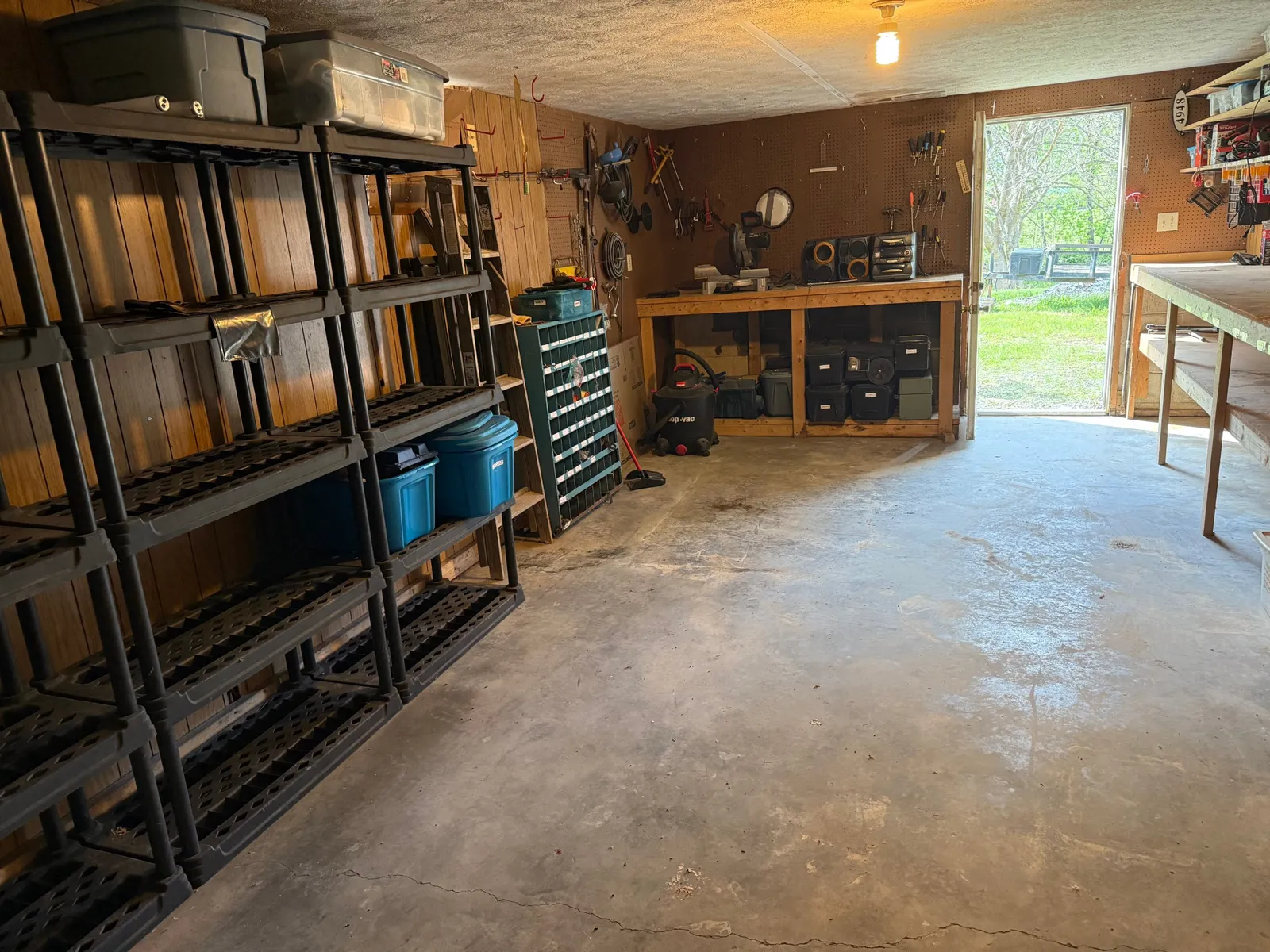
6. Handover: emptied and swept. Rooms are left emptied and broom-swept, retained shelving and fixtures in place — the condition a family, a listing agent, or a code inspector can act on.
A real cleanout — Chantilly, Virginia
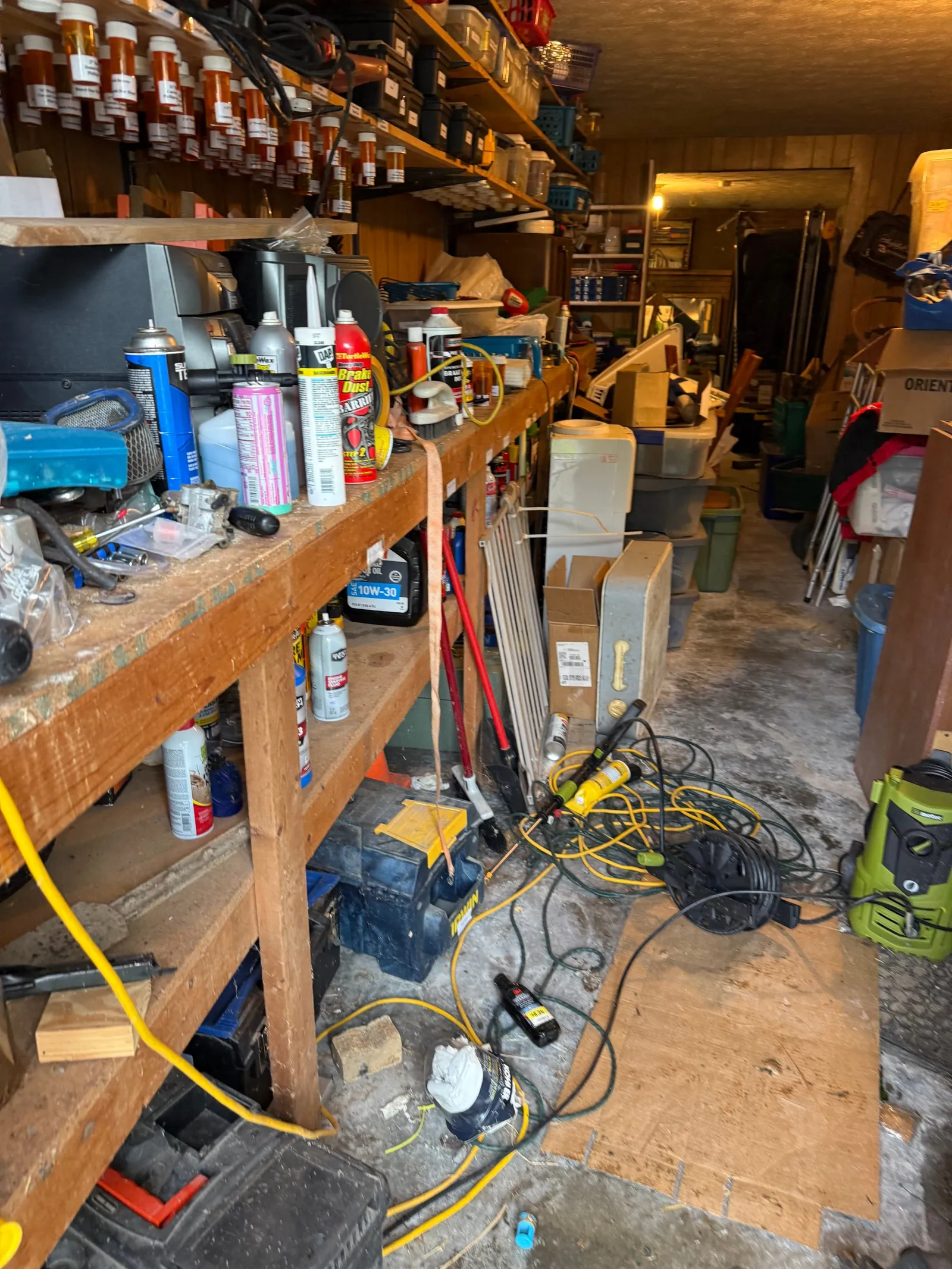
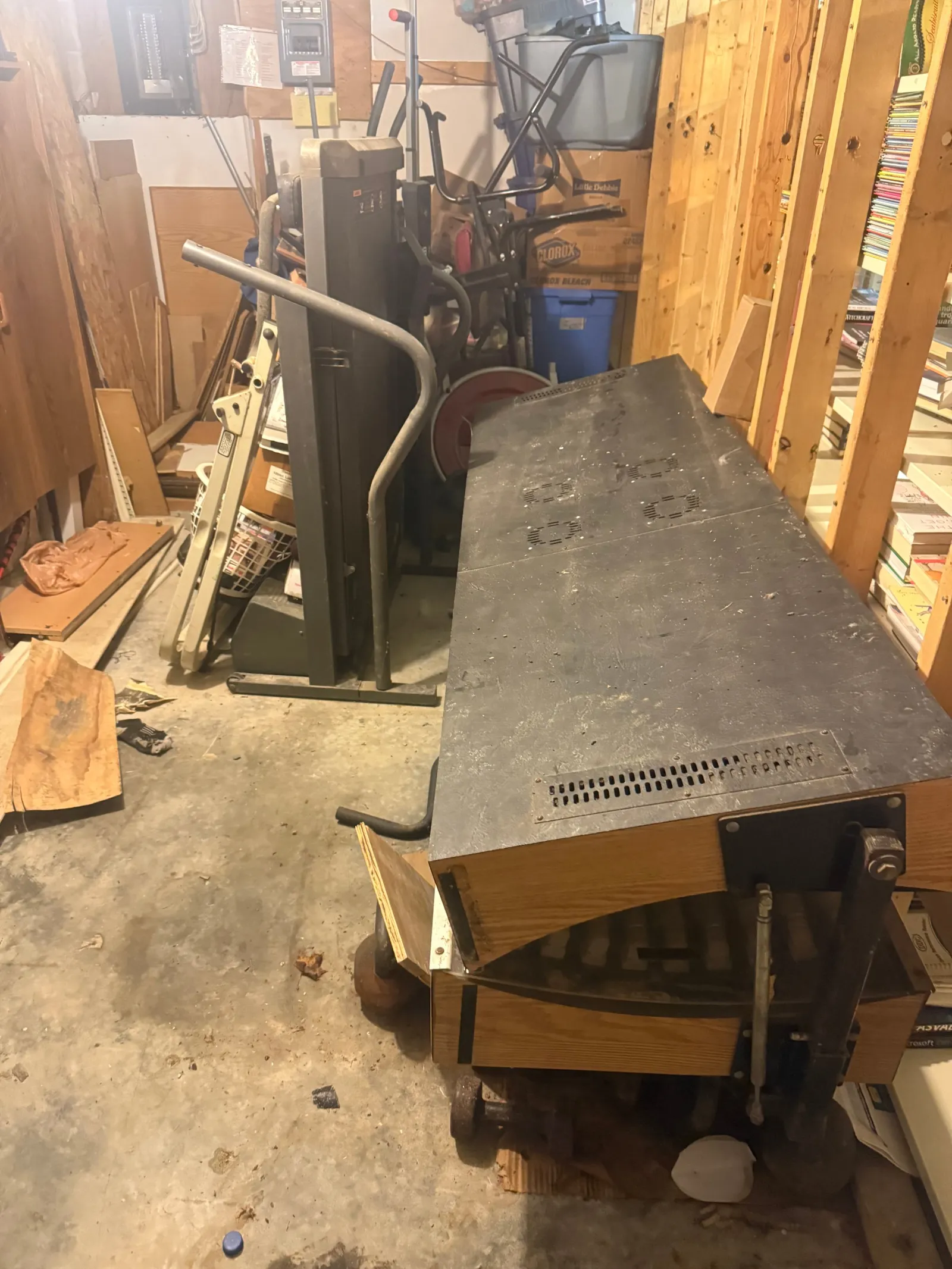
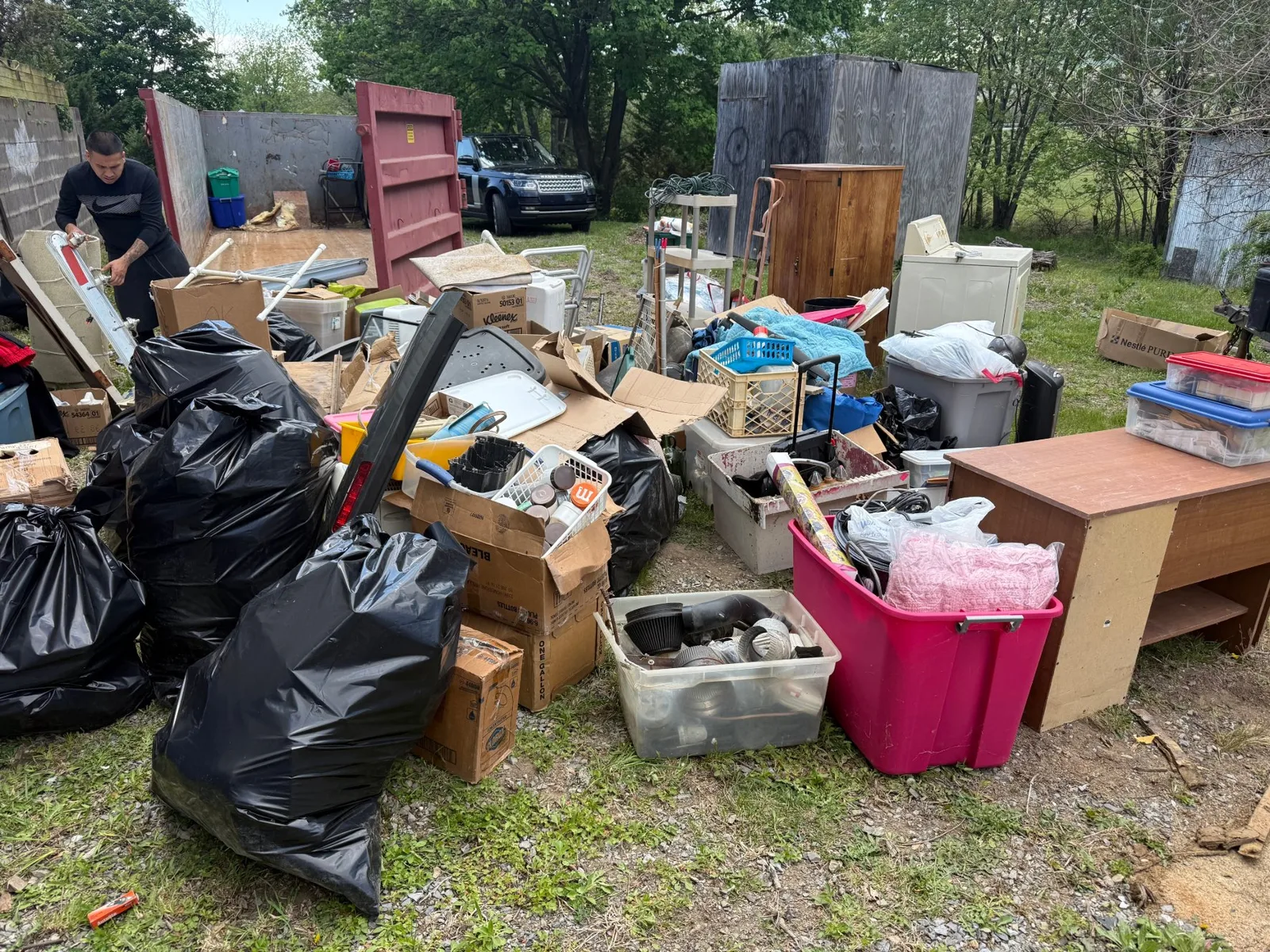
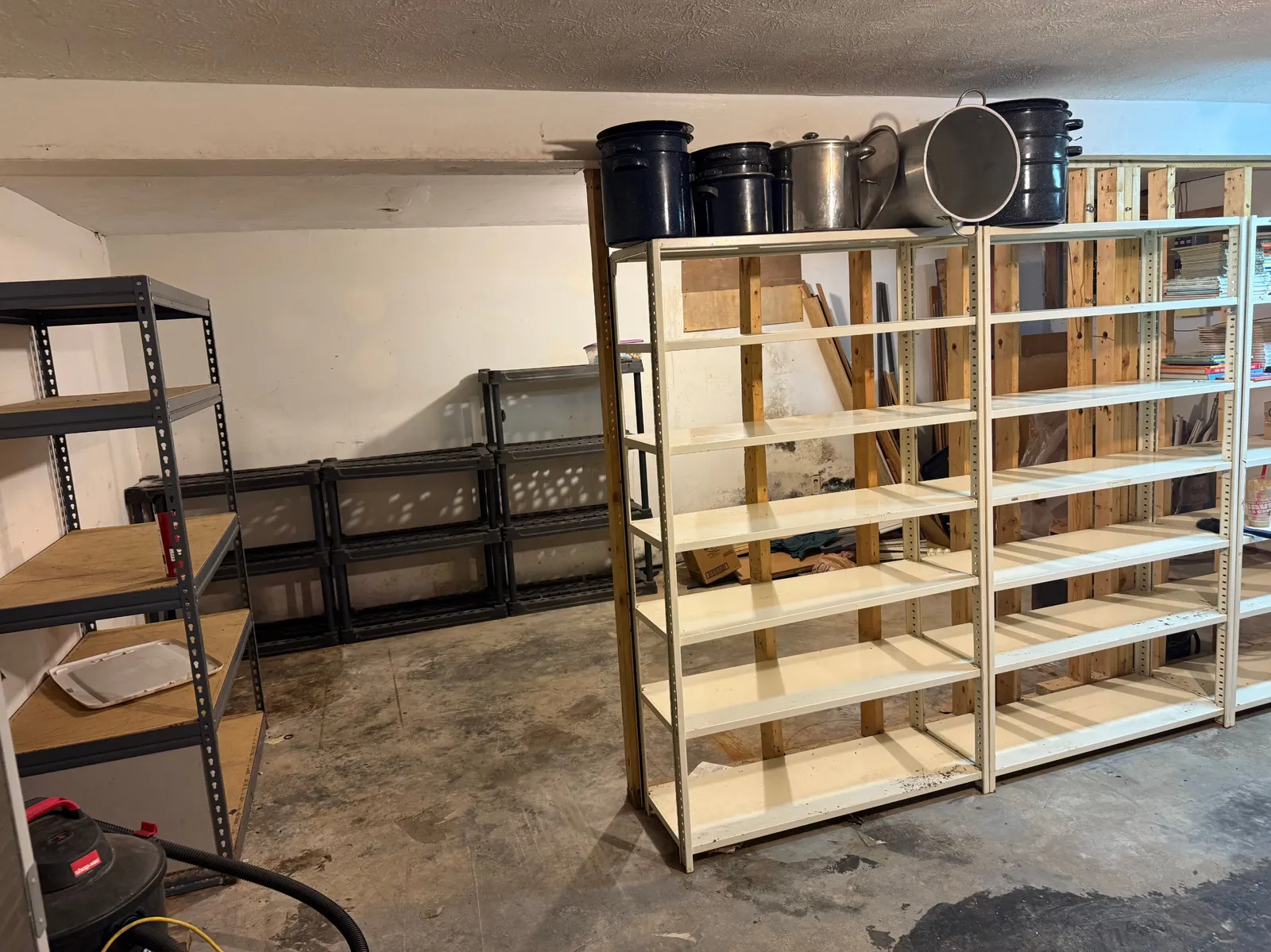
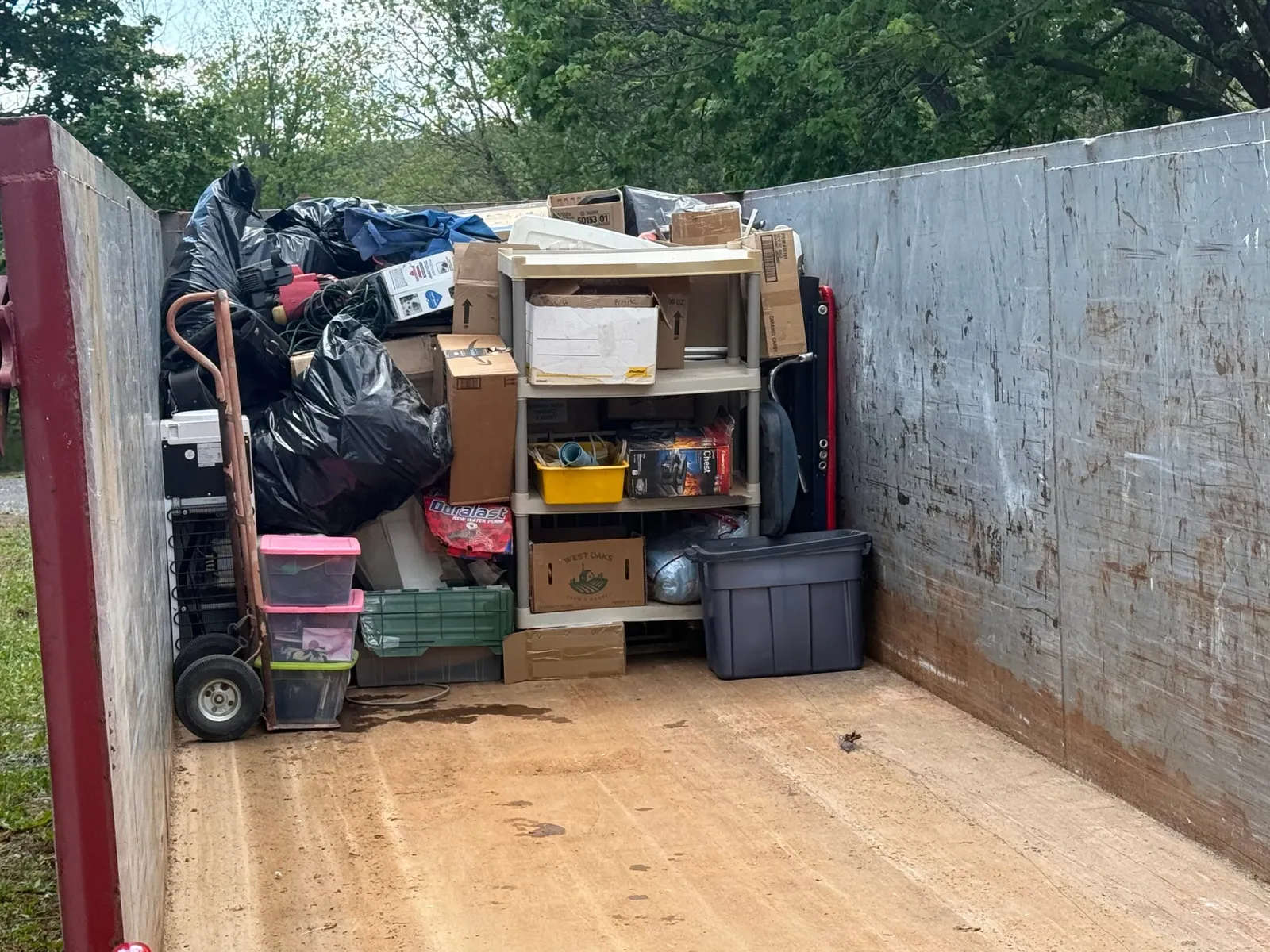
This is our own work, photographed on the job: a basement and garage cleanout in Chantilly, Virginia. The rooms held hoarding-density contents — hundreds of prescription bottles, paints, solvents and household chemicals, furniture, a washing machine, and a large wood stove. Everything was sorted and hauled to a roll-off container, and the rooms were left emptied and swept, shelving retained in place. No client name or address is published — the job is documented as work evidence, the way our clients’ privacy is always handled.
What it costs — stated honestly
Every cleanout is surveyed and quoted at one flat rate in writing before work begins — priced from the actual scope: rooms, density, heavy items, hazardous conditions, and disposal routes. We publish no per-square-foot range and no day rate, because a number invented before anyone has walked the property is not a price, it is a guess with a dollar sign.
For market context, the published figures a search will show you are vendor figures, not standards: one dumpster-rental vendor’s guides cite $0.75 to $2.50 per square foot of affected living space, and $1,000 to $2,000 per day; a national junk-removal brand prices by the fraction of a truck your load fills. Treat all of them as other companies’ marketing numbers. Ours is the written flat rate for your property, agreed before the job — and if you would rather be billed by the hour, hourly pricing is available when a client asks for it.
The research behind the work
How common this is. The International OCD Foundation puts hoarding disorder at an estimated 2% to 6% of the population, roughly three times more common in older adults, with about 75% of people who hoard also living with a co-occurring mental-health condition, most commonly depression. A 2019 meta-analysis pooling 11 studies and 53,378 participants found a pooled prevalence of 2.5%. This is not a rare condition, and a family dealing with it is not alone in it.
Why fire services treat it as an emergency. NFPA’s guidance to the fire service is plain: fire departments are experiencing serious fires, injuries, and deaths as the result of compulsive hoarding behavior; blocked exits prevent escape; and obstructed exits, falling objects, and excessive fire loading that can lead to collapse put responding firefighters at risk. That is why a code or fire-marshal notice is a deadline we work to, not a suggestion.
Why the written scope matters. There is no industry-wide standard for hoarding cleanups — the restoration trade press has said so outright. In a field with no standard, the written scope agreed before work begins is the buyer’s protection: what is sorted, what is hauled, what is disposed of and where, and the one flat rate it is done for. Ours is in writing, every time.
Insurance. Homeowners insurance usually does not cover hoarding cleanup — the condition is treated as arising from negligence or maintenance, and some policies exclude it. Ask your own carrier about your policy; do not count on coverage when you plan.
The full research layer — every claim with its source and its standing — is published as the hoarding cleanup dataset.
Where we serve
Hoarding cleanouts dispatch from both branches. The Flat Rate Movers — Winchester, VA (116 W Piccadilly St Suite 11, Winchester, VA 22601; Mon–Fri 8–6, Sat 8–4, Sun 9–4) covers the Shenandoah Valley and Northern Virginia — the Chantilly cleanout above ran from this branch. Flat Rate Movers Martinsburg WV (736 Williamsport Pike Suite 2, Martinsburg, WV 25404; Mon–Fri 9–6, Sat 9–4, Sun 9–4) covers Berkeley County and the Eastern Panhandle. One phone number for both: +1-540-422-2153.
Winchester branch — Hoarding Cleanup & Cleanout
The Flat Rate Movers, 116 W Piccadilly St Suite 11, Winchester, VA 22601. Hours: Mon-Fri 8-6, Sat 8-4, Sun 9-4. Phone +1-540-422-2153.
Martinsburg branch — Hoarding Cleanup & Cleanout
Flat Rate Movers Martinsburg WV, 736 Williamsport Pike Suite 2, Martinsburg, WV 25404. Hours: Mon-Fri 9-6, Sat 9-4, Sun 9-4. Phone +1-540-422-2153.
Questions, answered
How much does a hoarding cleanout cost?
It is priced per property, not per formula. We walk the property, review the full scope — rooms, density, heavy items, hazardous conditions, disposal — and quote one flat rate in writing before work begins. Published per-square-foot and per-day figures online are other vendors’ marketing numbers; we do not publish a range we have not surveyed.
How long does a cleanout take?
Most of the time in a cleanout is the sort — the family’s keep, donate, and discard decisions — not the hauling. A scoped job is scheduled against your deadline, and emergency-response calls are dispatched on the fastest available schedule.
Do family members have to be there, and who decides what is thrown away?
The decisions are the client’s or the family’s, always — in person, or by an agreed plan for families working from out of town. Documents, photographs, and valuables are set aside before any room is cleared, and nothing is discarded outside the agreed sort.
What if the property has biohazard conditions?
That scope is performed by the credentialed contractors we engage for it, under the same engagement and the same written flat rate. Tell us what you know about the property’s condition when you call, and it is planned into the scope from the start.
Can you respond to a code-enforcement or fire-marshal deadline?
Yes — emergency response is offered, and a dated notice is the first thing to tell us about. The cleanout is scoped in writing and the rooms documented, which is what an inspector’s re-inspection needs to see.
Will the neighbors know what is happening?
The work is discreet by practice: no signage about the job, no discussion of the property with anyone outside it. What a passerby sees is a crew clearing a house — the circumstances stay private.
Does homeowners insurance pay for hoarding cleanup?
Usually not — insurers generally treat hoarding as a maintenance condition rather than a covered loss, and some policies exclude it. Check your own policy with your carrier; plan on the written flat rate, not on coverage.
What happens to the things that are removed?
Usable goods go to donation, recyclable material to recycling, and the remainder to lawful disposal, by the routes agreed in the written scope. In the Chantilly cleanout the haul filled a roll-off container.
There is a safe / appliances / heavy furniture in the house. Can you take those too?
Yes — heavy contents are part of the service and are handled as heavy work. A safe is emptied first, always, and moved with the same method we move safes with professionally.
How do I start?
Call +1-540-422-2153 or get a flat rate quote. Tell us the property’s location, the rooms involved, any deadline you are under, and anything heavy or hazardous you know about. We schedule the assessment, and the written flat rate follows from the walk-through.
Junk removal — the cleanout hub
Furniture, appliances, debris and whole-property cleanouts. Surveyed in advance and quoted at one flat rate in writing, never by the hour — and every load is sorted toward donation, recycling and lawful disposal. Junk Removal