
Long-distance moving for high-value items: planning, protection, and timing
A long-distance move is planned backward from the destination: survey and inventory first, one flat rate in writing, protection and placement at both ends. When the load includes a safe, a piano or antiques, the heavy piece gets its own protocol — SIR survey, L/360 floor check, verified placement — and the household moves around it.
Get My Flat Rate Quote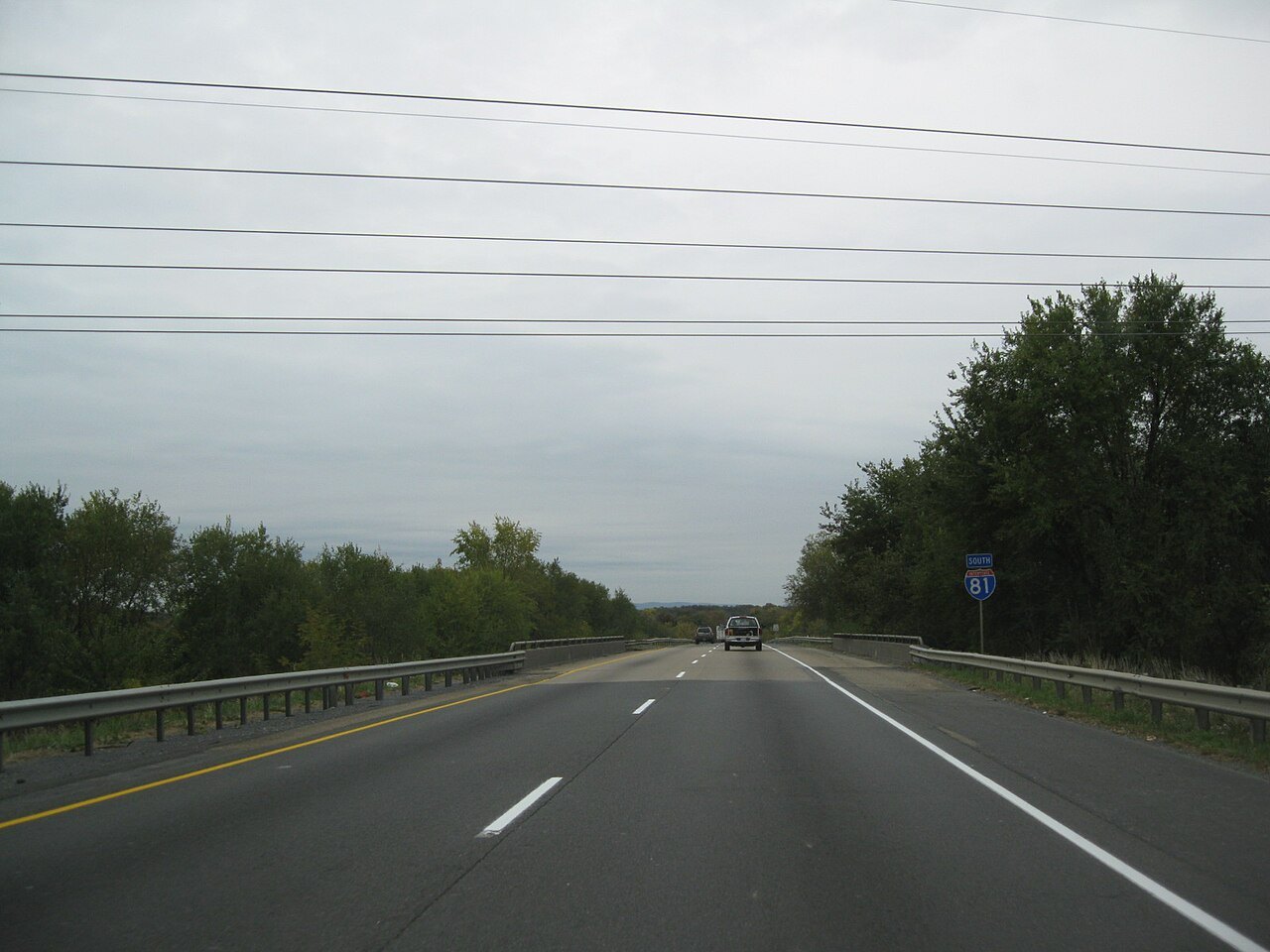
What makes a move long-distance?
Distance changes the rules, not just the drive. Our published taxonomy draws the lines the quote is built from: local is same area, same day; regional runs beyond local inside the corridor network; interstate crosses a state line, where the federal household-goods rules under 49 CFR Part 375 apply; cross-country is a multi-day run, typically 1,500 miles or more; and a destination lane is a named run, such as Virginia to Florida (5). The full treatment is our long-distance moving hub and its long-distance datasets.
Three consequences follow. The paperwork is federal: a written estimate based on a survey, a bill of lading that serves as contract and receipt, and liability levels set by federal rule, not a mover's preference (1, 2, 3). Delivery is a window, not an appointment — the sections below explain the spread and how to plan around it.
What travels is the whole household or office — and, on the moves this article is about, the pieces other movers decline: safes, pianos, medical and cryogenic equipment and antiques in the 1,500 to 3,500 lb band, moved under SIR and the KIM-GS Protocol at either end (5, 6). A piece like that is not freight and not furniture; it is a heavy job at each end, and a highway in between.
How a long-distance move runs, step by step
1. Survey and quote. Every move starts with a room-by-room survey, in person or through our free film-only video walkthrough survey room: you film, a person makes the estimate, nothing is auto-priced. Film only, always — never lift, move, open or climb anything heavy or locked for the camera. The full scope is reviewed, and the move is priced at one flat rate in writing before the truck rolls (5, 6). 2. Inventory. The load is itemized room by room, with condition notes, so quote, load plan and delivery paperwork are built from the same picture. Items worth more than $100 per pound are declared in writing — a federal rule with real consequences, covered below (1, 3). 3. Pack. Full or partial packing, furniture fully covered, boxes labeled in sequence so unpacking lands in order. Antiques and fragile pieces are wrapped to white-glove standard; a piece that needs a box built around it gets a custom crate (5). 4. Load. Loading is sequenced, with blanket and stretch-wrap protection on every piece. A high-mass piece of 1,500 to 3,500 lbs is surveyed and floor-checked to L/360 at the origin, with load spreading and floor protection run as part of the load (5, 6). 5. Linehaul. The household moves on the planned route over the I-81, I-66 and I-70 corridor network, dispatched from the branch the lane runs from, at the flat rate agreed, with no hourly clock running (5, 6). 6. Delivery. Delivery is handled inside a window set for your move from your dates. We publish no standard spread, because a window promised before the route is planned is a guess dressed as a commitment; the industry models are explained below, so you can judge any mover's answer, including ours (5). 7. Placement. At the destination the move is placed room by room — not dropped at the door — and a high-mass piece gets the same SIR treatment at this end: route and clearance survey, L/360 floor check, load spreading, verified placement (5, 6). 8. Walkthrough. A final walkthrough closes the move, damage noted on the delivery paperwork while the crew is still in the house (6).
One written number before the truck rolls — not a meter, not a delivery-day surprise. Get a flat rate quote: full scope reviewed once, priced once, agreed in writing.Example (illustrative): a three-bedroom Winchester home is moving to North Carolina, and the load includes a 1,900 lb gun safe. The survey covers both houses; the safe is declared, its route and floors checked to L/360 at each end, and it is planned as the load's anchor piece, the household packed around it. The quote is one flat rate in writing, the window set from the closing date, and the safe is placed and verified before the walkthrough closes the move.
The estimate is a legal document: know which kind you are holding
Federal law gives an interstate customer a written estimate based on a physical survey — on-site or virtual — unless the survey is waived in writing (2, 3). What the estimate promises depends on its kind, and the kind decides what can change by delivery day:
| Estimate type | What it promises | What you can be required to pay at delivery |
|---|---|---|
| Binding | The total cost is guaranteed for the quantities and services shown on the estimate (2, 3) | 100% of the estimate for the goods and services it covers |
| Binding not-to-exceed | A ceiling: you pay the binding figure, or less if the shipment weighs less (5) | No more than the ceiling |
| Non-binding | A reasonably accurate approximation; final charges follow the actual weight and the mover's tariff (2, 3) | Up to 110% of the estimate at delivery; the balance is billed after 30 days |
Two safeguards ride on every type. If you add items or services, the estimate must be reaffirmed or rewritten and signed before loading — after the truck is loaded, the mover may not change it (2, 3). And a mover who will not release your shipment when you have paid 100% of a binding estimate or 110% of a non-binding one is holding it hostage in violation of federal law (3). Before an interstate move, your mover must give you FMCSA's booklet, *Your Rights and Responsibilities When You Move* (3). Read the bill of lading before you sign it; it is the contract and the receipt for everything on the truck, and a blank one should never carry your signature (5).
Our own model sits deliberately on the simple side of this table. Every job is reviewed in full — scope, distance, manpower, equipment — and priced at one flat rate in writing before move day, never hourly. If the scope changes before loading, the quote is revisited in writing before anything moves (2, 6). The tagline on the logo is the promise the model is built under: Guaranteed Flat Rate or Your Move is Free!
Protection is a choice you make before loading day
Valuation is the most misunderstood word in a long-distance move. It is not insurance and not a policy: under federal rule it is the level of the mover's own liability for loss or damage, set by the Surface Transportation Board's Released Rates Order (1, 3). Interstate movers must offer two levels:
Full Value Protection is the comprehensive level, and the default: unless you waive it in writing, your shipment travels under it. If an article is lost, destroyed or damaged in the mover's custody, the mover must repair it, replace it with an article of like kind, or pay its current market replacement value. The minimum declared value under this level is $6.00 per pound of shipment weight (1, 3).
Released Value is the no-extra-charge level, chosen only by a signed waiver on the bill of lading — and minimal by design: liability capped at 60 cents per pound per article. FMCSA's own example makes the arithmetic plain: a 10-pound stereo component worth $1,000, lost or destroyed, settles at no more than $6.00 (1). On ordinary furniture the gap may be tolerable; on a shipment built around high-value pieces it is the whole loss.
The declaration is the step high-value owners cannot skip. A mover may limit its liability for an article of extraordinary value — anything worth more than $100 per pound; FMCSA's examples are jewelry, silverware, china, furs, antiques, oriental rugs and computer software — unless you list it specifically on the shipping documents (1, 3). An undeclared antique is, on paper, an ordinary article. Declare in writing, item by item, before loading day: the cheapest protection in this article (1).
When one piece outweighs the rest of the load
A household with a 1,500 to 3,500 lb piece inside it is two moves sharing a truck. The household follows the sequence above; the heavy piece follows SIR — Structural Integrity Relocation, our method for the band — with the KIM-GS Protocol where a safe is involved: route and clearance survey, stair planning, a floor check referencing L/360, load spreading, floor protection and verified placement, at both ends (5, 6). Floors, stairs and turns are checked at both ends, because the drive is the easy part; the two thresholds are the risk.
The rules of the piece are fixed. A gun safe is emptied by the customer before it moves — always; we move the safe, never its contents, and we offer no locksmith or combination services. Equipment is matched to the project, not promised from a list. Re-anchoring at the destination is done on request. The same planning covers pianos, antiques and museum pieces, and medical and cryogenic equipment in the band (5, 6).
This is published work, not a new claim. Our gun safe pages work the Winchester to Las Vegas run in detail — long-distance gun safe moving from Winchester, VA to Las Vegas, NV, including a specific 1,600 lb Winchester to Las Vegas case — SIR and L/360 checks at both ends, placement rather than curbside delivery at the far end (6).
Timing: seasons, lead time and the delivery window
The moving calendar is not flat. Peak season runs May through September, June the busiest month; industry statistics put about 41% of annual U.S. moves between May and August alone, and summer interstate booking runs eight to twelve weeks ahead (4). Our planning data agrees: a job relocation on a fixed start date is planned on a six-to-eight-week horizon, and month-ends collide with closings all summer (5). November sits outside that crush — flexible dates buy choice; fixed dates say book the survey as soon as the destination address exists.
The delivery window deserves the same realism. In van-line practice a shipment is delivered inside a spread — commonly 7 to 21 days, widening with distance and season — because route order sets delivery order and trucks are consolidated around it; the driver narrows it with a call ahead of arrival (5). Exclusive-use service, one shipment on one truck, tightens dates at a premium; a guaranteed date is a separate contractual instrument entirely (5). Your window is set at quote time, from your dates, the lane and the load — and the honest preparation is the same whoever you hire:
- Keep an essentials kit with you, never on the truck: medications, documents, chargers and laptops, clothes for the gap, first-night bedding and kitchen basics (5).
- Plan the far end loosely: no same-day commitments that depend on the shipment's arrival hour.
- Keep the destination ready: elevator booked, parking settled, the heavy piece's room and route cleared before the truck is close.
- Stay reachable: the delivery call comes ahead of arrival, and a missed window costs days, not hours (5).
Weather, traffic, federal hours-of-service rules and route stops are structural delay factors on any long run (5). A mover who promises a single exact day weeks out, at no premium, is selling you the spread without telling you its width.
What drives the price
A long-distance price is built, not metered, and the honest drivers are knowable in advance. Weight is the linehaul basis — weighed on certified scales, an estimate variance of about ten percent an industry-standard tolerance — and distance is not linear: the second thousand miles costs differently from the first (5). Around that core sit the accessorials, published here as domain education and never as our fee schedule: stairs, an elevator reservation, a long carry beyond roughly 75 feet, a shuttle when the truck cannot reach the home, packing, crating, specialty handling (5).
Against that list, our flat rate is set from the factors the guarantee terms name: the full scope of the job, the distance, the manpower and the equipment the project needs — reviewed once, priced once, in writing (6). There is no per-mile rate to multiply and no hourly clock to feed, and a heavy piece is priced inside the surveyed scope, not discovered as a surcharge at the destination. We publish no rate card, because a rate card for surveyed work would be a guess with our name on it.
Where we work
Long-distance runs dispatch from two distinct branches, never merged. Winchester — The Flat Rate Movers, 116 W Piccadilly St Suite 11, Winchester, VA 22601 (Mon–Fri 8–6, Sat 8–4, Sun 9–4) — sits where I-81 meets I-66. Martinsburg — Flat Rate Movers Martinsburg WV, 736 Williamsport Pike Suite 2, Martinsburg, WV 25404 (Mon–Fri 9–6, Sat 9–4, Sun 9–4) — is the Eastern Panhandle origin on I-81, under I-70. One phone reaches both: +1-540-422-2153. The company has run from these corridors since June 2010 (5, 6).
I-81 runs 325 miles through the Shenandoah Valley — Winchester, Harrisonburg, Staunton, Lexington, Roanoke — the longest single-state segment of the highway, on north toward Pennsylvania and south into Tennessee and the Carolinas; I-66 runs east to Northern Virginia and DC; I-70 crosses to Hagerstown, Frederick and Baltimore (6). Published destination lanes run from Virginia to Florida, Texas, New York, California and Nevada — including the Las Vegas corridor — and to Miami, each quoted at one flat rate in writing (5, 6). The home footprint behind the lanes is 53 published service areas, 14 served by both branches, Moorefield 26836 among them (5).
Freight has a version of this same geography: when the load changing modes is a container rather than a household, the work is the paired article in this series, Transloading at the Virginia Inland Port.
Frequently asked questions
How is a long-distance move priced — and why is there no per-mile rate?
Because a per-mile figure prices the road and ignores the job. Every job here is reviewed in full — scope, distance, manpower, the equipment the project needs — and priced at one flat rate in writing before move day, never hourly (6). Distance sits inside that review, not on a meter.
Will I get an exact delivery date?
You will get a delivery window set for your move from your dates; we publish no standard spread, because the honest width depends on the lane, the load and the season. In wider industry practice, spreads of 7 to 21 days are common on consolidated runs, and the driver calls ahead of arrival (5). Plan around the window — essentials with you, far-end commitments loose — and it stops being a risk.
What should I declare as high-value, and how?
Anything worth more than $100 per pound — FMCSA's examples include jewelry, silverware, china, furs, antiques and oriental rugs. List each article specifically, in writing, on the shipping documents before loading: unless you declare it, a mover may limit its liability for that article even under Full Value Protection (1, 3). On our moves the declaration is part of the inventory step.
Can a gun safe or a piano travel with the rest of the household?
Yes — planned as its own job inside the move. Pieces of 1,500 to 3,500 lbs move under SIR and, for safes, the KIM-GS Protocol: survey, L/360 floor check, load spreading and verified placement at both ends (5, 6). A safe is emptied by you before it moves, always; contents are never discussed or handled. Our Winchester to Las Vegas pages show the pattern end to end (6).
Is valuation the same as insurance?
No. Valuation is the mover's own liability level under federal rule — Full Value Protection, where the mover repairs, replaces or pays current replacement value, or Released Value at 60 cents per pound per article if you sign the waiver (1, 3). It is a tariff level of liability, not an insurance policy; third-party insurance is a different purchase entirely (1).
When should I book a long-distance move?
As early as the destination is real. Peak season runs May through September, June busiest, and summer interstate booking runs eight to twelve weeks ahead in industry guidance (4); a fixed start date is planned on a six-to-eight-week horizon in our planning data (5). Off-season the calendar opens up — but the survey still comes first, because the flat rate is built from the scope.
Sources
Federal Motor Carrier Safety Administration, "Before Requesting Services from Any Mover" (Protect Your Move) — the two federal liability levels; Full Value Protection as the default; Released Value at 60 cents per pound per article, with FMCSA's worked example (a 10-pound, $1,000 stereo component settles at $6.00); articles of extraordinary value over $100 per pound must be listed on the shipping documents; valuation as tariff liability, not insurance — fmcsa.dot.gov/protect-your-move/how-to/subpartB (retrieved 2026-11-02).
U.S. Government Publishing Office (eCFR), 49 CFR Part 375, Subpart D, §§375.401–375.405 — survey-based written estimates; binding estimates guarantee the total shown; non-binding estimates follow actual weight, delivery collection capped at 110 percent, balance billed after 30 days; amendments only before loading — ecfr.gov/current/title-49/subtitle-B/chapter-III/subchapter-B/part-375 (retrieved 2026-11-02).
Federal Motor Carrier Safety Administration, *Your Rights and Responsibilities When You Move* — the booklet interstate movers must provide: survey-based written estimates; the binding and non-binding rules for consumers; the $6.00-per-pound minimum declared value under Full Value Protection; the extraordinary-value declaration; the rule that a mover refusing release after payment of 100% of a binding or 110% of a non-binding estimate holds the shipment hostage in violation of federal law (2022 update, retrieved 2026-11-02).
moveBuddha, "When is Peak Moving Season?" — peak season May through September, June busiest; 41% of annual U.S. moves between May and August in moveBuddha's industry statistics; summer interstate booking eight to twelve weeks ahead — movebuddha.com/blog/peak-moving-season/ (retrieved 2026-11-02).
The Flat Rate Movers, Long-Distance Moving datasets — the eight-step operations chain; distance bands and shipment sizes; the corridor and lane network; delivery-window models published as domain education, no company spread claimed; commercial terms and cost drivers; planning horizons; the 53-area footprint and quote path — theflatratemovers.com/datasets-long-distance.json (retrieved 2026-11-02).
The Flat Rate Movers, Long-Distance Moving hub and long-distance gun safe pages — the service definition, corridors and published steps; the Winchester to Las Vegas pages with SIR and the KIM-GS Protocol at both ends — theflatratemovers.com/long-distance-moving/ and theflatratemovers.com/long-distance-gun-safe-moving-winchester-va-to-las-vegas-nv/ (retrieved 2026-11-02).
Get your flat rate
One flat price in writing before move day — never hourly.
Get My Flat Rate Quote → · Or call +1-540-422-2153.
📞 Start here
Phone: +1-540-422-2153 · Email: ratemovers@gmail.com
Hours by location — Winchester: Mon–Fri 8am–6pm · Sat 8am–4pm · Sun 9am–4pm. Martinsburg: Mon–Fri 9am–6pm · Sat 9am–4pm · Sun 9am–4pm. Winchester, VA: 116 W Piccadilly St, Suite 11, 22601 · Martinsburg, WV: 736 Williamsport Pike, Suite 2, 25404. Guaranteed Flat Rate or Your Move is Free!
By Henry Pitts Jr. — Reviewed by Henry Pitts, owner, The Flat Rate Movers.