We live on Interstate 81. With bases in Winchester, VA and Martinsburg, WV — where I-81 meets I-66 and I-70 — we dispatch faster, route smarter, and keep flat rates honest across the Shenandoah Valley and the Eastern Panhandle.
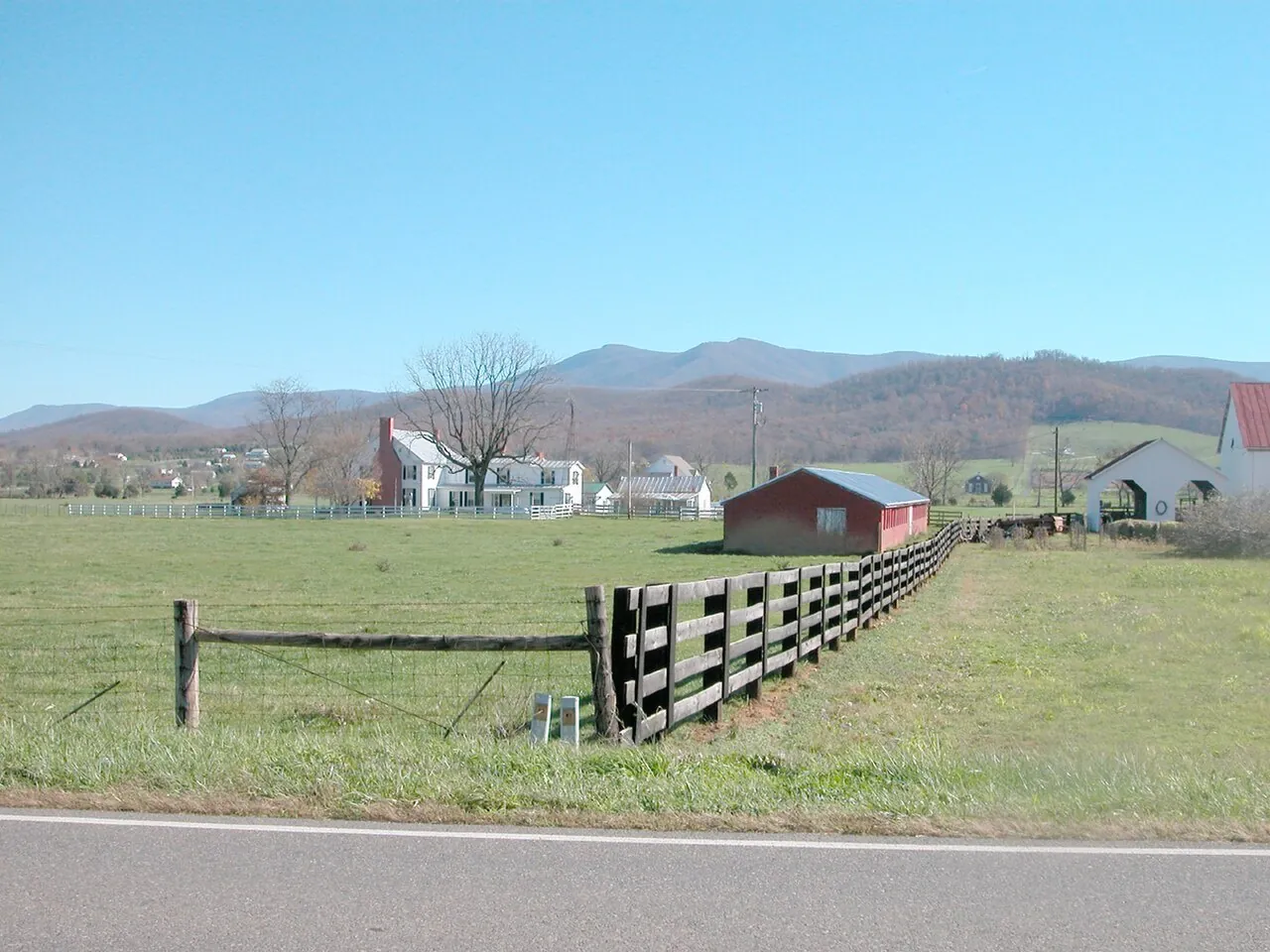
Farm country in the Shenandoah Valley, VA — the valley floor I-81 runs through on its 325-mile Virginia segment, the longest in any state · Photo: Pollinator, CC BY-SA 3.0, Wikimedia Commons
Tap a stop — north to south on I-81
The corridor, stop by stop
Three interstates, one dispatch
I-81 — The Spine
North–south through Martinsburg, Winchester, Harrisonburg, Staunton, Lexington and Roanoke. Our daily working road for Valley moves and long-distance runs.
Local & regional home moves
Long-distance south & north
Heavy-asset runs with SIR planning
I-66 — To NoVA & DC
East from the Valley through Front Royal toward Northern Virginia and Washington, DC. The route for relocations between the Valley and the metro.
Valley ↔ Northern Virginia moves
Commercial & office relocations
Final-mile delivery into the metro
I-70 — To Maryland & the Ports
Through Hagerstown and Frederick toward Baltimore — and the freight path that connects our transload work to the Port of Virginia network.
Container loading & unloading
Transloading at hub points
Export freight toward port
Why the corridor matters to your price
Hourly movers charge for every mile the clock runs. We quote flat — and because our crews start on the corridor instead of driving hours to reach it, there's less deadhead time baked into your price. Fewer wasted miles, tighter arrival windows, one agreed number.
Dispatch from Winchester, VA (I-81 meets I-66) and Martinsburg, WV (I-81 with the I-70 connection): local and regional home moves, long-distance south and north, heavy-asset runs with SIR planning, transloading at hub points, and export freight toward the port — all on I-81 as the spine, with I-66 to Northern Virginia and DC, and I-70 to Maryland and the ports.
Who Route 81 is for
Valley and Panhandle households and businesses whose move starts on the corridor, and long-distance customers whose run follows I-81, I-66, or I-70 — where crews starting on the corridor mean less deadhead time and tighter arrival windows.
The three corridors — highway geography (domain reference)
This table describes the roads themselves — where they run and where they join. It is geography, not coverage: a town a highway passes is not a place we serve unless it appears in the footprint table below.
Corridor
The road
Our dispatch anchor
I-81 — the spine
About 855 miles north–south along the Appalachian spine from Tennessee to New York; the Virginia segment runs about 325 miles up the Shenandoah Valley — Martinsburg, Winchester, Harrisonburg, Staunton, Lexington and Roanoke, north to south — paralleling US 11, running with I-64 between Lexington and Staunton, and carrying, per VDOT, the highest per-capita truck volume in Virginia.
Both branches sit on it: Winchester, VA and Martinsburg, WV.
I-66 — to Northern Virginia & DC
About 76 miles east from its western terminus at I-81 near Middletown, VA (I-81 exit 300), through Front Royal (US 340 / US 522), across the Blue Ridge at Manassas Gap, to Washington, DC — the only Interstate running west from Washington into Northern Virginia.
Winchester, at the I-81 × I-66 junction.
I-70 — to Maryland & the ports
Crosses I-81 at Hagerstown, MD and runs through Frederick toward Baltimore — the freight path that connects our transload work to the port network.
Martinsburg, on I-81 with the I-70 connection.
Where corridor moves run — the published footprint (sourced)
Coverage is the footprint, kept as two per-branch lists and never merged. Every place in it traces to one of the two sources named here; the place-by-place record, with each place's GeoJSON feature identifier and source, is published in the coverage dataset.
Dispatch branch
GBP service areas
Extended footprint
Total
The Flat Rate Movers — Winchester, VA (I-81 × I-66)
17 — Google Business Profile service-area list (owner-supplied 2026-10-27; Bristow, VA added and the list verified 2026-10-30)
21 areas are served by both branches and are noted as shared in both lists. Full geometry: service-area.geojson (87 features).
Corridor dispatch, in our published terms
Planned by route, access and load
Dispatch is planned by route, access, and load — not by the hour. Which corridor carries the move, which junction it turns at, and which branch dispatches it are settled before move day.
Crews start on the corridor
Because our crews start on the corridor instead of driving hours to reach it, there is less deadhead time baked into your flat price — fewer wasted miles, tighter arrival windows, one agreed number.
One flat rate
Every corridor job is quoted at one flat rate agreed in writing before move day — the full scope reviewed first: the load, the distance, the manpower and the equipment. Hourly pricing is available when a client asks for it. Guaranteed Flat Rate or Your Move is Free!
Heavy runs
Heavy-asset runs on the corridor are planned under SIR Structural Integrity Relocation and the KIM-GS Protocol, with an L/360 floor check at either end.
Route 81 questions, answered
Why does the corridor matter to price? Because crews start on the corridor instead of driving hours to reach it, so there is less deadhead time baked into your flat price — fewer wasted miles, one agreed number.
Do you run heavy assets on Route 81? Yes — heavy-asset runs with SIR planning, route survey, and L/360 floor check at either end.