Frequently asked questions
Who can unload, count and restack an ocean container near the Virginia Inland Port?
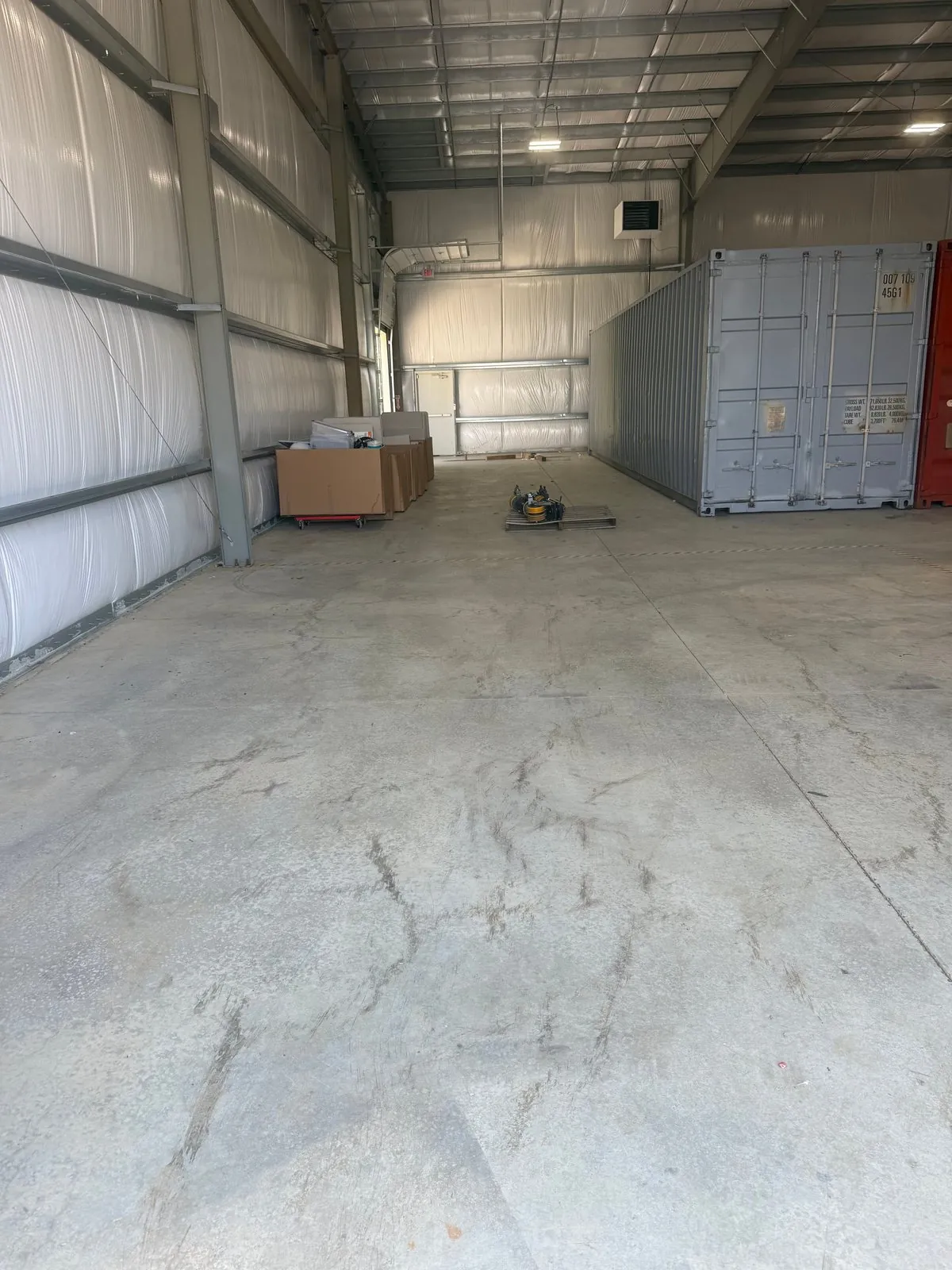
The Flat Rate Movers can. Container freight moving through the Virginia Inland Port at Front Royal is received on our warehouse floor in the Winchester corridor, one short inland leg from the ramp: floor-loaded freight is unloaded piece by piece, palletized freight is pulled by forklift, and everything is counted against the paperwork, checked at the door and restacked or rebuilt into outbound loads. The work is quoted per job at one flat rate, agreed in writing before dispatch.
What is the difference between transloading and cross-docking, and what does it cost?
Transloading moves freight out of one unit and into another — an ocean container into domestic trailers or trucks — and can include counting, sorting, staging and rework along the way. Cross-docking is the straight-through case: freight crosses the dock from inbound to outbound without entering storage. Cost is quoted per job, not per container: the full scope — container size, floor-loaded or palletized, piece count, how fine the sort runs, any rework, and the onward legs — is reviewed and priced as one flat rate in writing. No per-container rate or fee schedule is published for this service.
Can you rework a rejected or shifted load near I-81?
Yes. A shifted, collapsed or refused load is recovered on the floor: salvageable freight is separated, counted and restacked, damaged freight is set aside and reported as found, and the rebuilt load is repalletized, rewrapped in stretch wrap, braced and banded before it moves. Open-deck freight is tarped or re-tarped in the same rework, so the onward leg leaves weather-tight.
What does tarping or re-tarping a load involve, and what does it cost?
Tarping covers open-deck freight — flatbed, step-deck and similar trailers that give cargo no protection from rain, snow, wind or debris — with heavy tarps secured by bungee cords, rope or straps. Re-tarping replaces or re-secures a tarp that has loosened, torn or shifted in transit. In the carrier market, Anderson Trucking Service publishes $50 to $150 to tarp a legal load, $200 to $300 for an over-dimensional tarp charge, and up to $750 or more for heavy-haul tarping — those are carrier accessorial figures, not our prices. On our floor, tarping and re-tarping are rework steps scoped inside the job's one flat rate, quoted in writing before dispatch.
Do you offer bonded warehousing, customs brokerage or FTZ services?
No — and the distinction matters. The Virginia Inland Port is a U.S. Customs-designated port of entry, and its ground in the Warren County Industrial Corridor is covered by Foreign Trade Zone 20 magnet sites (the zone’s grantee is the Virginia Port Authority); Warren County also lies within Foreign Trade Zone 185’s service area, which is not a site designation. Those are the port's statuses, not ours. We are a private handling operation near the port: we do not broker customs, we operate no bonded warehouse and no foreign-trade zone activity, and we claim no refrigerated or cold-chain handling and no hazmat handling. What we do is the physical work — unload, count, split, stage, rework and deliver the freight.
How fast can a container be turned once it reaches the Valley?
Turns are planned as scheduled operations inside the carrier's free time, because that clock — not the unload itself — is where container costs are won or lost. The exact timing for your container is set in the written quote, from the freight detail you give us: container size, floor-loaded or palletized, piece count, destination and timing. Empties are turned around instead of sitting.
How is transloading priced?
Per job, at one flat rate. We review the full scope — the container, the freight, the sort, any rework, staging and the onward legs — and agree the price in writing before dispatch. There is no per-container rate, no weight-based container rate and no automatic or instant estimate; the estimate is human-made. The same flat-rate discipline runs the whole company: Guaranteed Flat Rate or Your Move is Free!
Can you run a whole warehouse project near the Virginia Inland Port, not just unload containers?
Yes. Project support at the inland port is scoped and run as a project: survey of the site and freight, a written scope, a crew and sequence plan, execution with exceptions reported the same day in writing, and closeout against the scope — priced at one flat rate agreed before dispatch.
Do you provide labor support to 3PLs working through the Virginia Inland Port?
Yes. We provide overflow and project crews to 3PLs, distribution centers and carriers working freight through the Front Royal terminal — receiving and devanning, sort and segregation, cross-dock turns, rework and surge labor. It is support, not operation: your site and systems, our supervised crews. The dedicated page is 3PL & Project Support at the Virginia Inland Port.